


That Ryan Montgomery is ‘The Fastest American Runner in Western States History’ isn’t really the headline. The nature of records is that they’re there to be broken. He will be usurped at some point. For me, that headline only tells half of Ryan’s story that I know.
This is a man who contains powerful, and seemingly disparate multitudes, you see. He’s a corporate strategy consultant, he’s queer, and yes, he’s also the fastest American runner in Western States history.
That last bit happened back in June when he finished 3rd in the men’s division, clocking those 100 miles almost two hours faster than his previous record in 13:53:55, but the other two parts are core to both the idea and to the athletic progress of Ryan Montgomery.
Athletes struggling to get paid enough to live is a tale as old as time. On the track we’ve seen female athletes lose sponsorships due to pregnancy time and again. Bandit has made waves by giving unsponsored athletes an unbranded all-black racing kit and $1,750 in no-strings cash to help them stay in the game. That’s obviously not enough to sustain them long-term, but it’s not nothing.
With headlines that suggest trail running is worth $20 billion and growing by over 10% per year, how does The Fastest American Runner in Western States History make his money? With a trail running career that goes back 10 years at this point, it’s been a remarkably steady journey to this point.
“My whole motivation in this sport has always been about me doing really cool things: me pushing my body to new limits, and learning about my mind and body through the vehicle of ultra running.”
2020 was the year where he really “flipped the switch.” He hired a coach to see what he could really do from a performance lens. Four consecutive Western States appearances suggests that he can do plenty, but he quickly realized that “this sport is quite expensive – flying around the world requires a fair bit of discretionary income.”
At the same time, he also realized that trail running was a viable career, so treated his sponsorships as such. While he has been paid as an athlete for seven of them, two years ago, he switched from Altra to sign as one of Janji’s first elite athletes.
“I actually walked away from more money in order to work with a partner that feels smaller and more indie and niche where I could really ingrain myself into the brand, knowing that I was leaving money on the table.”
“What feels fun for me is to work with a brand that is growing a lot, where I can be really involved in their world.”
In that time, Janji has really pivoted their profile from marketing to the road runner to being fully focused on the adventure trail runner. That move also left Ryan open to negotiating with a separate shoe sponsor.
“You see a lot of athletes go head-to-toe with one sponsor [but] there are a lot of different shoes out there, and I want to be able to try them, so I was thinking about how I can work with many different partners over time, and do one-off collaborations around key moments.”
“That’s been my model with Western States. I did a one-time collaboration with Norda last year, and this year I did a one-time collaboration with Les Sportiva. I’ve actually found this model to be great because I can try new things, and I actually find it to be more lucrative.”
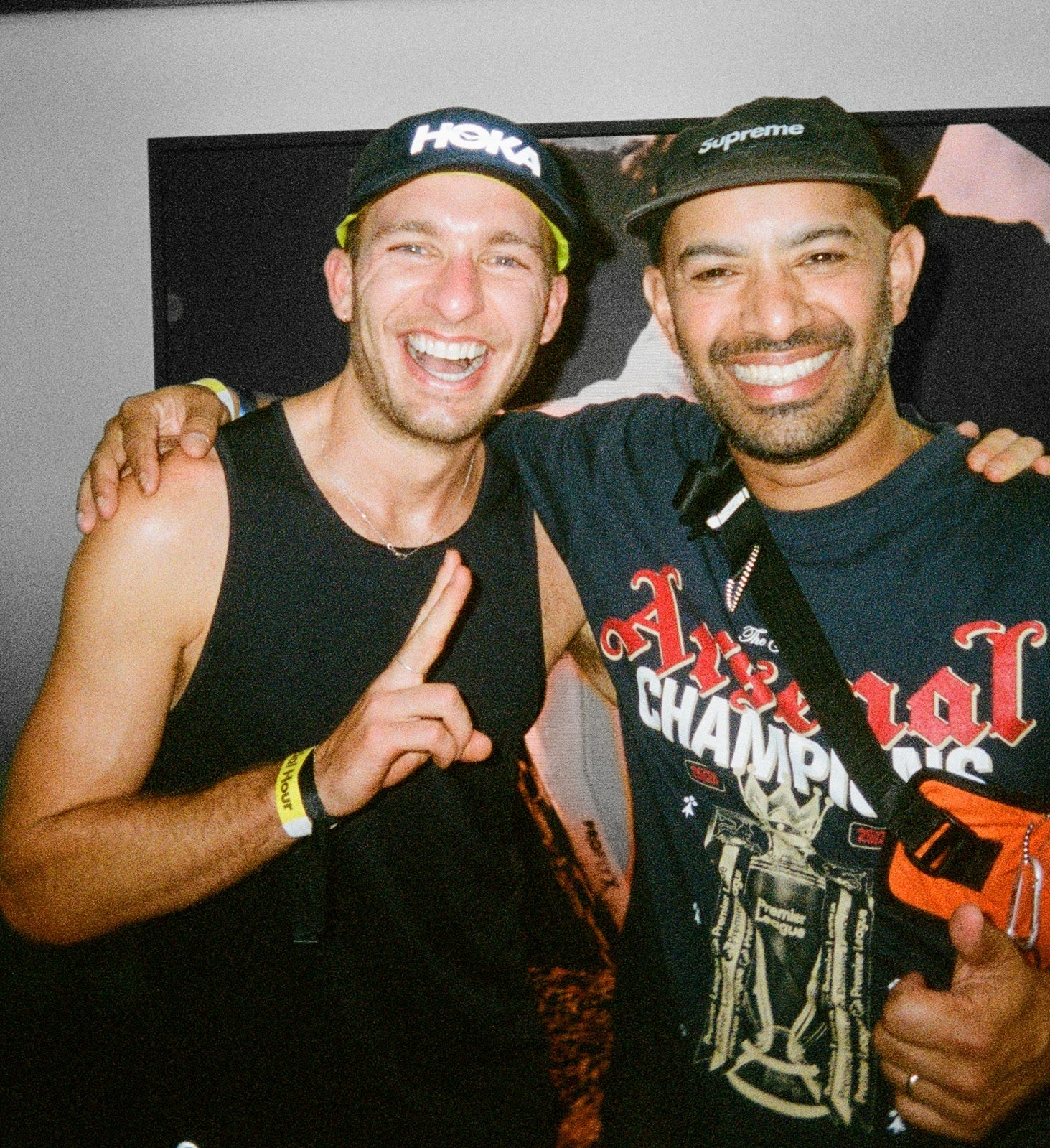
Indeed, I met Ryan a few weeks after this conversation in Chamonix in the HOKA FlyLab where he was preparing for his UTMB 2027 appearance. Will he be racing in the Tecton X4? I guess we’ll just wait to find out.
That professional career experience in partnerships and sales has very clearly helped Ryan bring a deep business perspective to his running career, but he also helps other athletes negotiate their contracts. Diverse revenue streams are key to how he’s building a sustainable career in the sport. One serious injury and he’ll be able to rely less on his own headlines for revenue.
Right now, however, he’s at the highest pinnacle of his career so far. Bigger deals are surely to come in 2027. Running might not be a side gig for long.
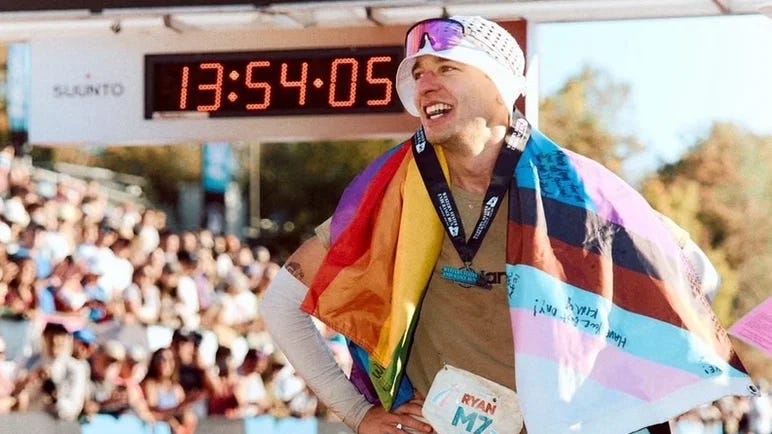
Another part of Ryan’s life that benefits from that heady position as The Fastest American Runner in Western States History is his role in the queer community. Ryan crossed the Western States finish line draped in his Progress Pride flag.
“I see an opportunity for me to be a tool in social change. That’s why I choose to finish Western States every year with my Pride flag. I don’t wear a Pride flag every day, [but] it’s a moment where it’s potentially going to go viral and foster conversation. Whether you hate it or not, it’s having the effect that I want it to have.”
“If I can keep having that conversation and being visible, that’s where we ultimately will eventually eradicate homophobia.”
He leverages his sponsors to fund OutTrails, the annual running retreat he has organized since 2021 to celebrate and promote diversity, connection, and inclusion out on the trails. His goal was to create a trail-focused space that was “specifically queer” for 20 to 35 people, “prioritizing non-binary, trans, and people of color, because they are the most marginalized groups.”
“My goal was to create a once-a-year moment where we could all come together and create a really special place. Just having them be in this ecosystem, and the feedback that I get is so emotional, so happy.”
The catalyst for creating this affinity group was repeated uncomfortable observations as he became more visible as a queer athlete in trail. Ryan notes the “extreme barriers to people” in trail running which are not just financial, but also from a community perspective. As his friends group expanded to include more people who were non-binary, trans, and people of color, they shared with him that they just didn’t see themselves in trail. That’s why they don’t go trail running.
“I really believe that we all have an opportunity to be involved in social change. I grew up in a place that was really not welcoming to queer people, which is why I came out later in my life. It’s something that I still see online, how much of a lack of inclusion there is for queer people.”
I ask Ryan if he ever feels any pressure to speak out. It’s a place in the world where we have something in common. Everything he was saying about how the queer community feels about being visibly represented in trail running is mirrored in the South Asian community in all running.
“Sometimes we put an expectation on people who are marginalized – whether you’re queer, black, a woman, or disabled – to be an advocate, or to be vocal, or to be an evangelist, but I really think that’s toxic.”
“For example, I run in the non-binary division. The second place in the women’s division is also non-binary, but they do not want to be visible. They do not want to hold a Pride flag. They just want to be a badass athlete.”
“This is where I go back to social change theory. We all have different roles to play, and maybe Riley [Brady]’s role is just to be a badass athlete, and then it’ll naturally happen. But maybe my role is I’m going to be more vocal, I’m going to do more educating, I’m going to do more bridge-building. That’s a different role, but that doesn’t mean that they’re better or worse. They’re just different.”
That resonated with me hard. I’ve had pressure put on me to speak out more or to speak differently about issues of racial representation, and that bothered me somewhat. In a world where we want D, E, and I, it’s important to remember that the first one is Diversity, and that includes diversity of speech.
If everyone says the same thing about a subject in the same way or using a single medium, it’s not possible for the message to reach everyone.
Not only is Ryan Montgomery a thoughtful, active advocate for queer representation in trail, but he is the walking (running) embodiment of an elite athlete who also happens to be queer. He is in a place where his body and his mind are the strongest that they’ve ever been in his life, so what would be his advice to himself a decade ago?
“Back then, I don’t think being a professional athlete was a goal. Back then, I had just graduated with a business degree, and I was a strategy consultant in San Francisco, doing the whole idealistic Corporate America career. I would tell him there are so many other paths to pursue, and to be more open-minded.”
It’s reasonable advice, and while it’s difficult to improve on being The Fastest American Runner in Western States History, I wouldn’t bet against it.
Thanks for reading,
Raz x
FOLLOW ME - Instagram | Strava | email: raz@runningsucks101.com
Get your copy of This is Running (my book)
USA - Bookshop.org US | Amazon US | Barnes & Noble | Signed copy (US)
UK - Bookshop.org UK | Amazon UK | Waterstones
Review This is Running - Goodreads
https://www.instagram.com/ultra.ryan/?hl=en
https://www.instagram.com/out_trails/?hl=en
Loved reading more about Ryan! I jumped back into the trail world this spring, and while the Cocodona coverage felt like dipping a toe back in, watching WS100 with friends sucked me all the way in. The image of Ryan grabbing that Pride flag and crossing the line looking so full of joy will stick with me for a long time.