


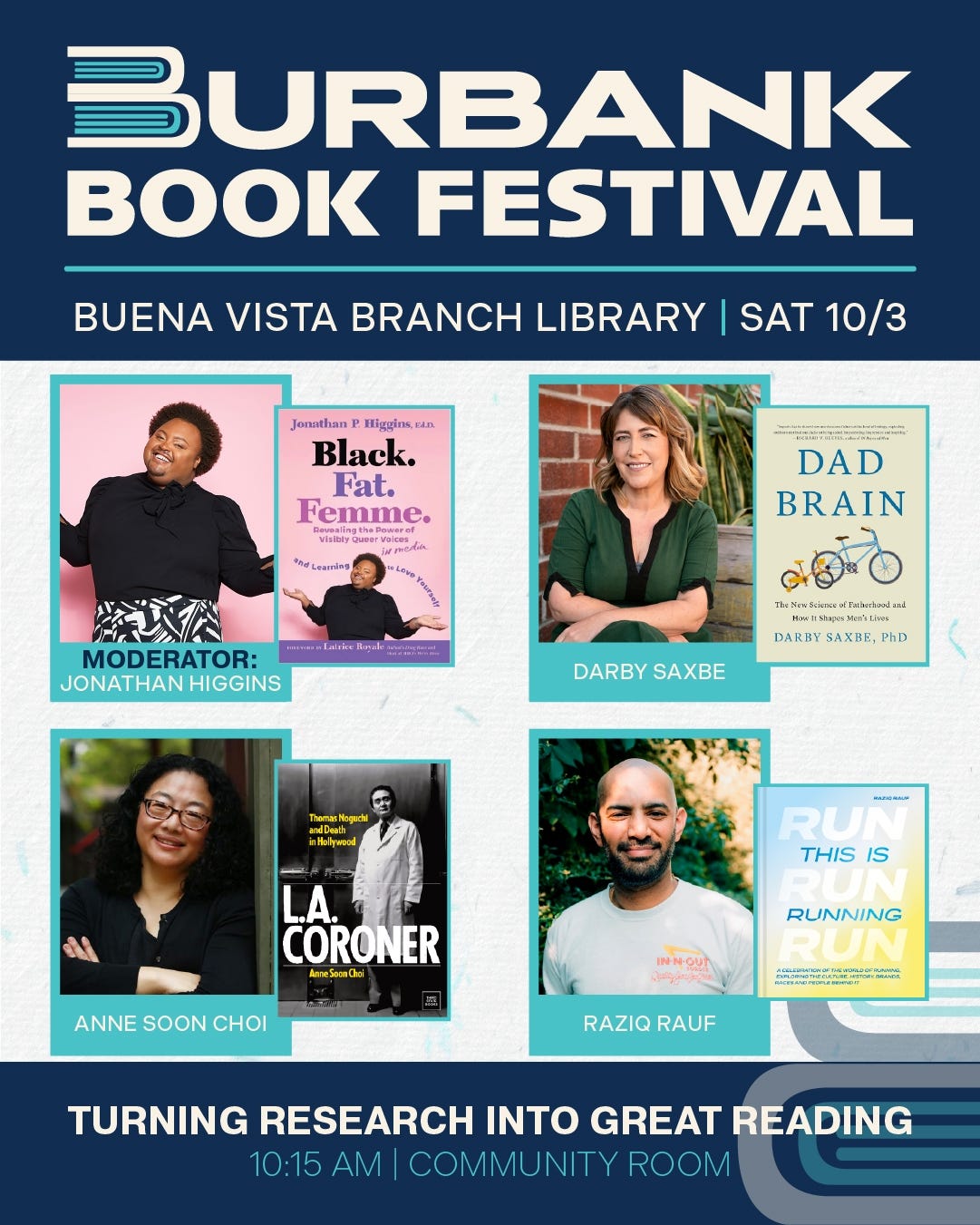
If you’re in Burbank this weekend, come see me talk about my writing process at the Burbank Book Festival. I’m on a panel on Saturday morning at 10.15am titled, ‘Turning Research into Great Reading.’
A whole host of local authors are going to be featured at the Buena Vista Branch Library, so if you are nearby, come on down. I’ll be talking about how I’ve adapted one particular technique I learned in journalism college and used it throughout my book.
Those of you who have read This is Running and picked up on it are the teacher’s pet. The rest of you can come down and get a signed copy of the book on Saturday.
I watch a lot of TV
Like… a lot. But I’m totally ok with that.
Last week, the New York Times posted their list of the 100 best TV shows of the 21st century. I’m in a group chat with some similarly nerdy friends who like to run, drink good beer, and watch a lot TV and film. I was somewhat surprised when I saw that I’d watched over 30% more of the list than the next person, but…
I watch TV most evenings.
I watch TV while I’m eating my meals.
I watch TV to pass the time on the stationary bike.
I watch TV while I’m doing the rehab exercises injured runners are meant to do.
I watch TV while I’m doing those helpful exercises runners are meant to do.
Television is the endgame for anyone creative. It’s why you’re not classified as an Influencer unless you’re creating video content on social media. It’s why a book deal is great, and being an author is a prestigious and worthy thing to say out loud, but it’s the TV or film adaptation that might get a writer enough money to live.
All the work is front-loaded for free during the writing process – the source material; the intellectual property – because most people do not pay to read, even if that’s where the best stuff is, and first. Everyone happily pays to consume motion picture, however.
I know this because my whole career has been working through a broken system for journalism that nobody has any answers for, but I also have my streaming subscriptions, and I go to the cinema. As previously mentioned, I watch a lot of TV.
One of my favorite TV shows of the past few years has been How To with John Wilson on HBO. It was a comedy docu-series that ran for three seasons from 2020 to 2023. Wilson pieced together thousands of fragments of B-roll footage from walking around New York City to construct 18 hilarious tutorials (How Tos) on seemingly random topics: how to put up scaffolding, how to clean your ears, how to find a parking spot.
After 25 minutes of a narrative that weaves from the mundane daily through the bizarre everyday, you’ll wonder how you ever lived without John Wilson’s perspective and the fascinatingly obscure connections that he makes.
Last week, I watched Wilson’s first feature film The History of Concrete, and it was as much of a love letter to NYC as any of those episodes. Aside from the usual hilarity and uncanny real-world observations of humanity, the film featured a couple of cool things in my running orbit.
Apologies for the mild spoilers (mild because there’s no way this explains the film at all), but there’s a scene in a city garden opposite the 3sixteen flagship store. I interviewed founder Andrew Chen a couple of years ago and asked why his denim brand was hosting runs, and I’ve seen him speaking about the Elizabeth Street Garden.
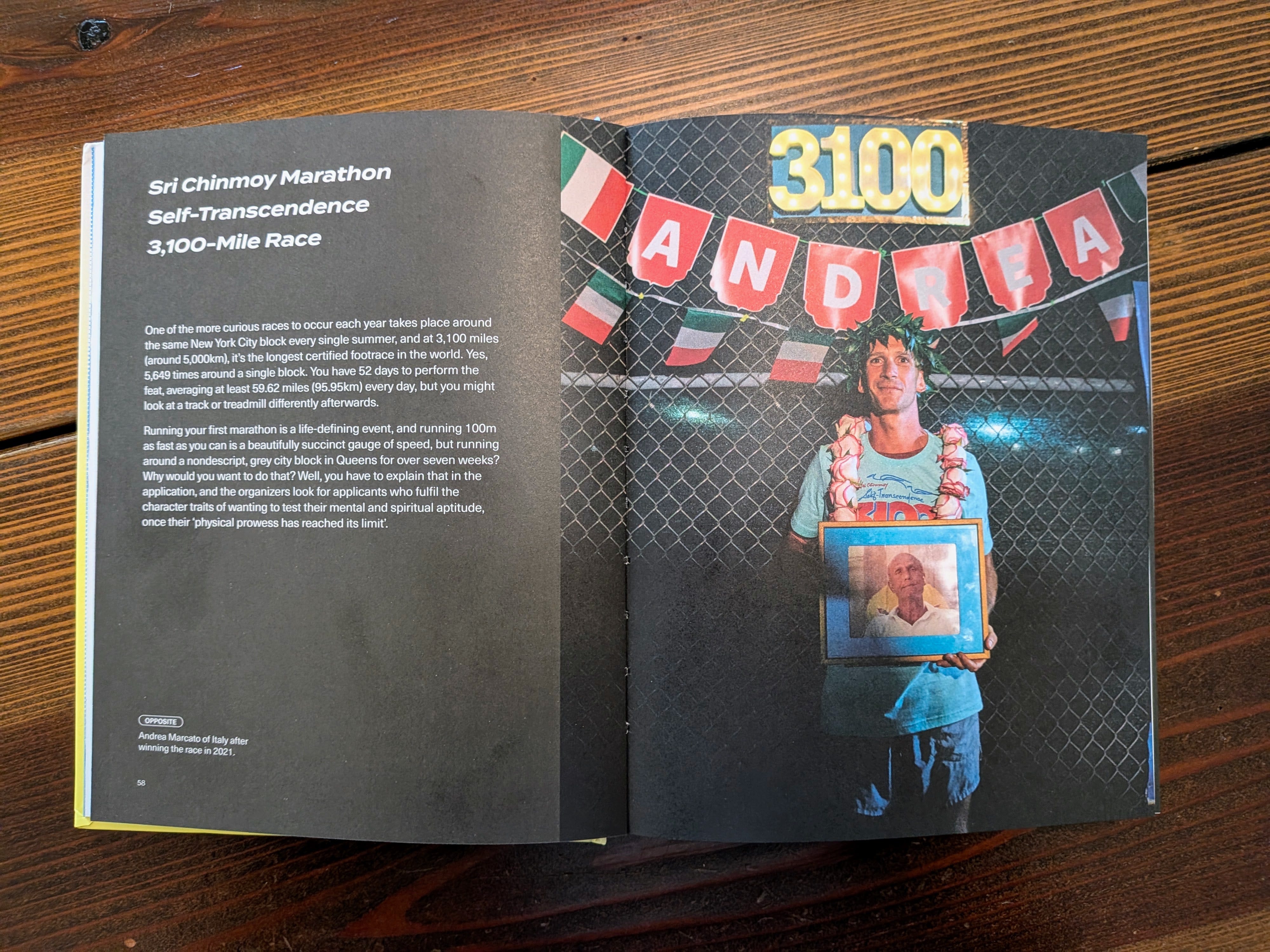
The larger pleasant surprise was seeing the Self-Transcendence 3100-Mile Race woven into the story. Last year, I interviewed Sanjay Rawal, who made a brilliant film about the mammoth 52-day extravaganza that’s run on a concrete sidewalk around a single city block. I feature it as one of the most influential races of recent times on p.58-59 of my book, This is Running.
I think about concrete a lot. It’s the surface that I personally run on the most these days. I live in the city, and I just don’t have the extra 30 minutes to spare in my day to drive out (or run) to a trail.
This isn’t a situation where I think about what others have (time) that I don’t have. It’s more about making lemonade. As much as I extol the virtues of running on trails, enjoying the pros and cons of nature’s greenery, running is just one (albeit major) part of my life, and it fits in accordingly.
My good friend Christopher Beanland wrote a book called Concrete Concept, where he celebrates 50 pieces of brutalist architecture found in cities built in the mid-20th-century. It’s an aesthetic that I also enjoy, but my love of urban architecture and infrastructure goes far beyond just concrete.
I’ve written about how to run in a new city before, but enjoying the city you live in is just as important. It’s why running around LA’s filming locations is one of my favorite things to do. It’s why running with different crews is a fun way to get to know other parts of this sprawling conurbation. It’s why I wish I was in New York during the summer for Miler Running’s Grid City explorations of how New York City was designed.
There is no chance of boredom in this world if you stay curious, and I just want to see it all, and try to piece it all together.
Talking of NYC…
In one calendar month, I will be in New York for the marathon with rabbit. I’ll be staying at the Clubhouse powered by Halo. I called it as the “calm in the marathon storm” back in February, and now everyone who experienced it in Chamonix is saying the same. There are still a few rooms left.
I’ll be hosting some creativity workshops at the rabbit Clubhouse, so sign up when you see it on the rabbit IG. Will I have some other events that are also cooler than everyone else’s? You bet. Details coming next week, probably.
Give me a shout if 1) you want to go for a non-shakeout run or 2) if you want to come cheer with me while watching Arsenal play Liverpool on the Sunday during the race.
Reply, message, email. Ya know.
thanks for reading,
Raz xx
ME - Instagram | Strava | email: raz@runningsucks101.com
Get your copy of This is Running (my book)
USA - Bookshop.org US | Amazon US | Barnes & Noble | Signed copy (US)
UK - Bookshop.org UK | Amazon UK | Waterstones
Review This is Running - Goodreads