


In a world of runners searching for answers from within, what does community and support really look like? Alyssa Clark, a young veteran of the trails, has the answers.
Growing up in a family of endurance athletes (cross-continental cyclist, triathlete marathoner, national team rower, elite cross-country skier) Alyssa really had no choice in falling in love with the great outdoors. But it wasn’t always running.
She read Dean Karnazes’ book Ultramarathon Man when she was just 10 years old, and thought, ‘I’m going to do that one day.’ It’s not classic reading material for a 5th grader, but there was another surprising aspect to her reading that book at that age.
“I hated running at this point. I wanted to be on a sports field.”
That all changed over the next couple of years as Alyssa was diagnosed with ulcerative colitis. A very competitive Nordic skier, she had to think about her relationship with sport as repeated hospitalizations and surgeries impacted her ability to place well. She had to relearn her approach to being outdoors – a place deeply entrenched in her soul.
“Running became the constant throughout all that, and has been the thing that I view as my freedom. For a long time, running was my way of escaping confinement, and to prove that I wasn’t sick.”
“I had to learn how to run with it. I’m really grateful that I’ve gotten to learn that. There have been rocky moments, but I’ve gotten to run through that transformation from a pretty negative place to a much more positive place.”
You don’t get much more positive than finishing on the podium during UTMB week, and that’s what Alyssa did at the end of August when she finished third in the Sur les Traces des Ducs de Savoie AKA TDS, a 95-mile / 150km trip through the Alps.
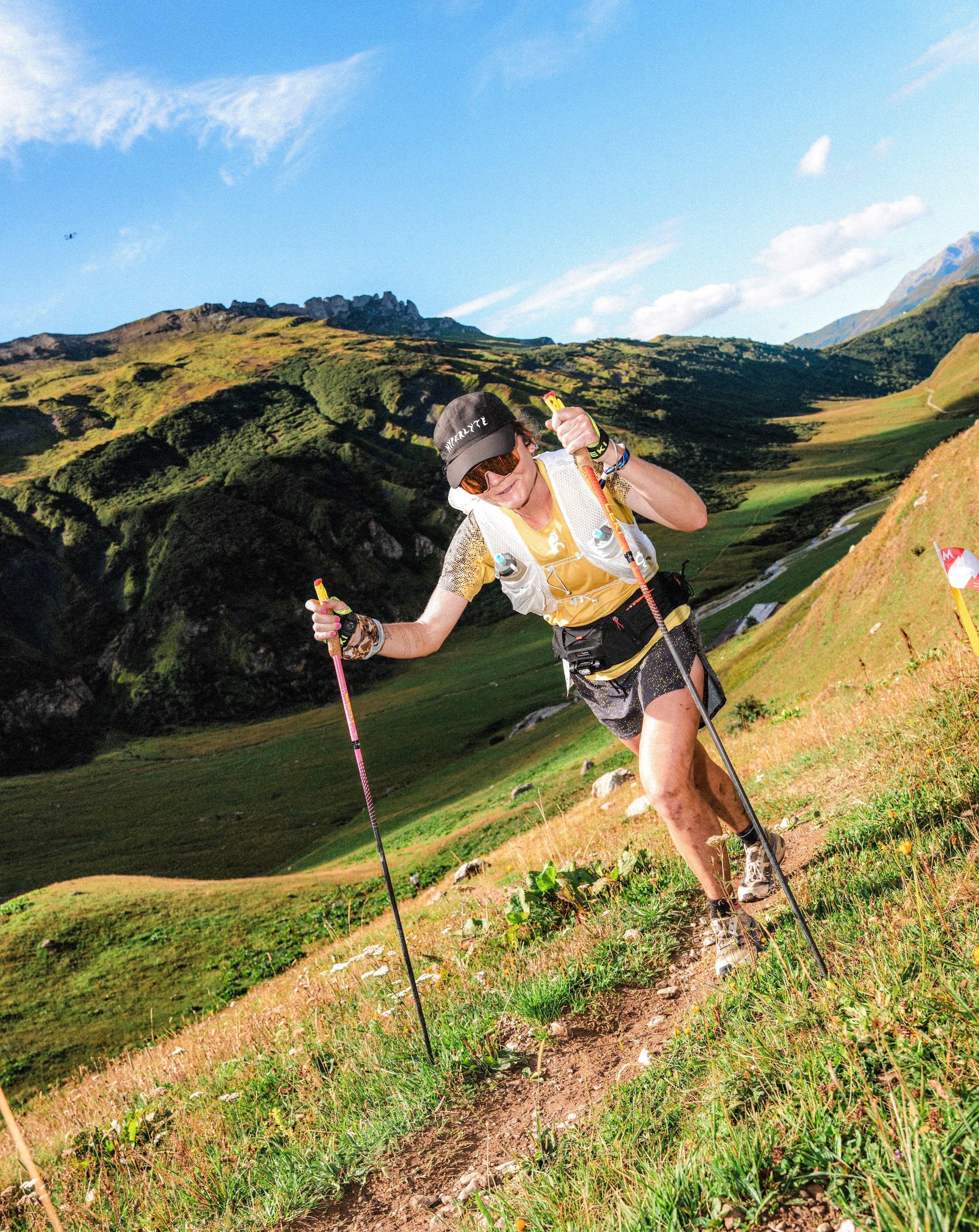
It’s far from her first achievement, of course.
2020 - 95 consecutive days running a marathon before contracting Covid
2022 - finished third overall at Moab 240
2023 - first female in the Canyons 100-miler
2024 - finished an agonizing 11th in the UTMB 100-miler
2025 - first female to complete the HURT 100 in Hawaii in under 24 hours
2026 - third female at TDS UTMB
It’s an impressive list, but when I met her in Palisades Tahoe, she was getting ready to crew fellow On athlete, Jeff Mogavero. Her role this time was to be in charge of filling pantyhose with ice. It’s a seemingly innocuous job, if not a little absurd, but cooling a trail runner down during the height of summer in the American West is a full-time job performed in short bursts over 14 hours. Jeff finished 7th at UTMB.
Alyssa explains exactly how and why that offering of community is key to what makes trail unique.
“What other sport has that? In a peloton, you have the position of domestique rider, whereas this… I’m not in the race.”
“Sometimes the race you need is not your own, so you get to be a part of the energy, enthusiasm, for someone else, and that’s really special.
Why did you start crewing?
“The trail running world, a) is very small, and b) there’s a lot of ‘We’re all in this together.’ So we all help people. I think one of the most important things – and I’ve done this a few years in a row – I race, and then I volunteer, or I crew or pace someone, and then I race.
“Racing is really selfish. You’re asking your crew – who can be anywhere from one sorry soul to eight people – to give up days of their lives to help you. I think to really be embedded and to be a part of the sport, you have to experience both.”
How important is it to crew for other people?
“I always get a bit discouraged when I hear runners say they’ve only raced and never really paced anyone or helped anyone, because I think it’s so crucial to a) understanding the culture of the sport and b) just giving back and being a part of someone else’s journey.”
“When you take on 100 miles, yes, we’re racing each other, but it’s you against the distance, and knowing that there is absolutely no way I’m gonna get out of this without help. So we need each other to accomplish that to finish.”
It’s that personal journey that is so important in ultra endurance. The individual sacrifice and the community contribution, combines with the intensity and the intimacy of sharing difficult, incredibly human hours together. That heady concoction leads to a treasure trove of special stories filled with depth and passion, that are often told with startling admissions of personal realities.
What do you bring to crewing?
“Because I’ve been in the sport for a long time, I tend to take the lead role. I know how I want to be crewed. I’ve seen how I’ve been crewed really well, so I take it seriously.”
“I really love pacing. That’s always a lot of fun to be able to share that experience out on the trail. You’re always playing this game of tough love and compassion, but also you know what they want, and sometimes it’s hard for them to remember that. You’re trying to push, but not so hard they get mad at you.”
What makes a bad pacer?
“A mismatch of energy and a mismatch of personalities. You should have a discussion beforehand of what you want out of your pacer. Do you want to be talkative? Do you want to be telling stories? Do you want to shut up? Do you want to be in front or behind? Do you want tough love? Or do you want to have them step back and let you solve your mental game? Those are conversations you should be having.”
“The roughest is when your pacer just goes quiet, or they complain about something. I had my dad pace me at Vermont 100 way back when, and on the last hill he was like, ‘This one sucks!’ I was like, ‘Really, dad??’ He did not get asked back.”
Pacer 101 checklist
Someone who is capable of 1.5x your pace effort, allowing them to be focused completely on your needs
Use your faster pacers earlier in the race while you have the energy and focus
Your more positive pacers should come in for the low points (not your dad…)
Good communication is key to building a great relationship and a great race
Spouse and friends might not be best at the end because they hate to see you in pain
Away from the pressure of finding out about the latest trail shoe, the ‘best’ hydration vest, and a new generation that is discovering trail maybe after ‘completing’ the more solo endeavors of track and road racing, there is a camaraderie to trail that is difficult to replicate without diving in head first.
There is a very definite amount of dedication required to truly be considered part of the trail community, but it’s not about gatekeeping. It’s about giving yourself to a sport that desperately wants to return the favor with interest.
Thanks for reading,
Raz x
ME - Instagram | Strava | email: raz@runningsucks101.com
Buy my book, This is Running
USA - Bookshop.org US | Amazon US | Barnes & Noble | Signed copy (US)
UK - Bookshop.org UK | Amazon UK | Waterstones
Review This is Running - Goodreads