

The definition of insanity? 5,649 laps of a single NYC block.
I speak to Sanjay Rawal, director of 3100: Run and Become, one of my favorite films about running.

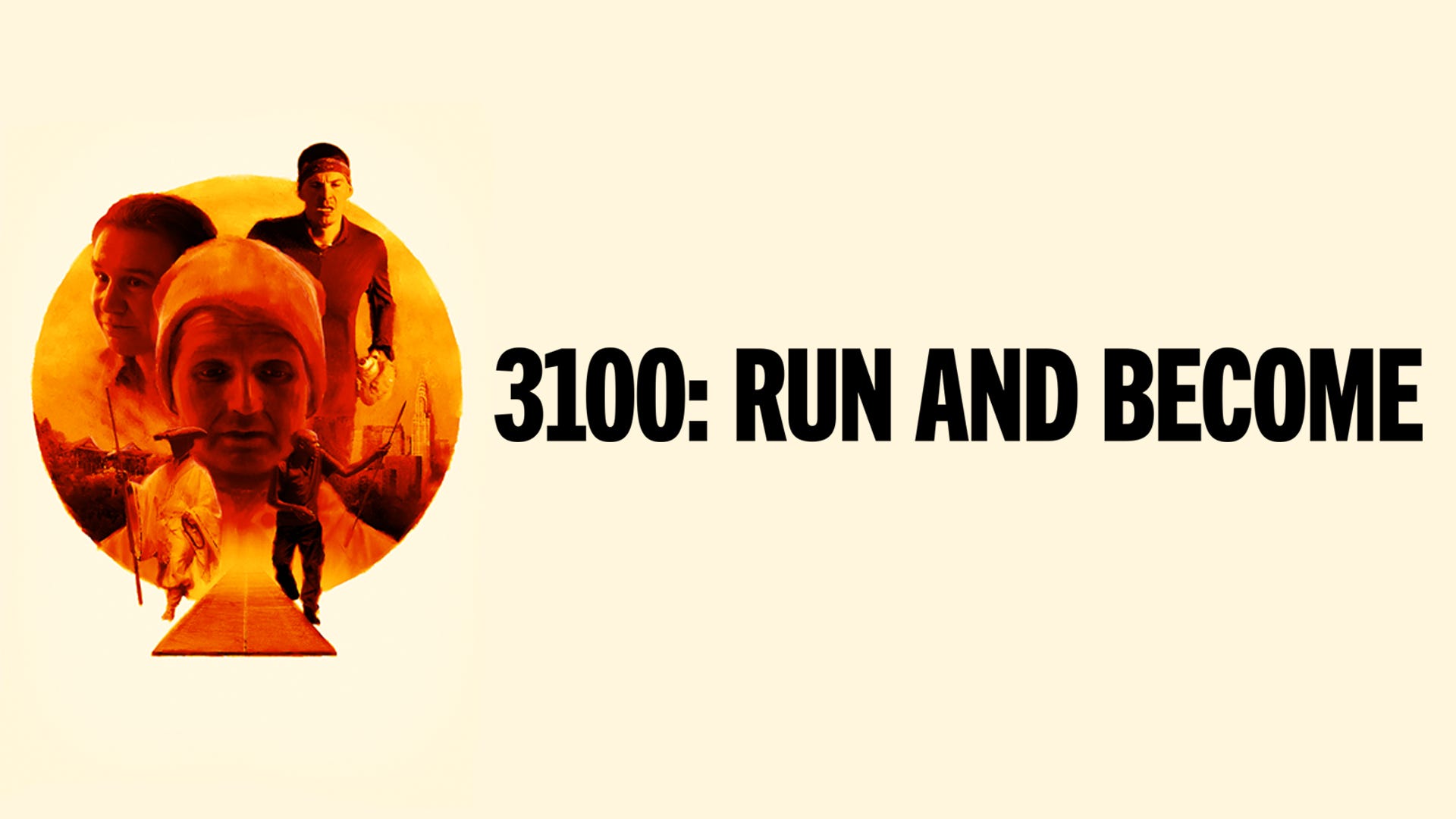
I watched 3100: Run and Become again back in September. It’s one of my favorite films about running. It might be the only film about running that I truly enjoy. With a 100% rating on Rotten Tomatoes, I daresay I’m not the only one.
It begins by scanning what are likely New Yorkers cavorting in the street. It immediately feels like summer, and that’s confirmed by the news audio that’s overlaid, warning residents not to exert themselves in peak summer heat. The camera cuts to a runner.
Run and Become is centered around The Self-Transcendence 3100 Mile Race, which takes place around a single 0.56-mile city block that houses a high school in Jamaica, Queens, New York City, but it’s so much more than that.
This film is about what it takes to be an endurance runner when the course is painfully repetitive, taking in four 90-degree turns over 100 times a day for up to 52 days. This is not a ‘simple’ 200-miler, after all. This tests one’s endurance of mind as you do the same thing in the same place with the same people over and over and over again.
It would be the definition of insanity, but nobody is expecting different results.
I thought I’d look up the director, and sent a speculative email searching for Sanjay Rawal. I got a reply, so I suggested we meet when I visited New York in November. Sanjay asked if I’d come to Queens from where I was staying in Brooklyn. He said he knew a spot.
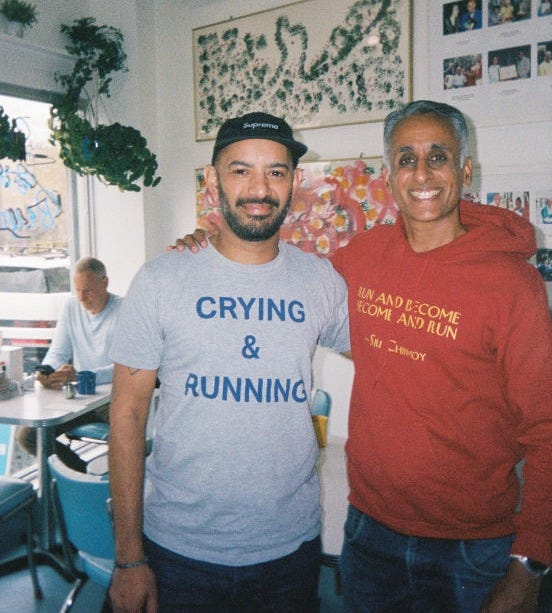
We’d have lunch at Smile of the Beyond, New York’s first vegetarian diner, formed in 1972 by students of Sri Chinmoy, the Bengali1 spiritual leader who founded the 3100 Mile Race. Situated less than a mile from that block that a few hopeful humans run around every year, this short trip was something of a pilgrimage for me.
Whether you look at this annual urban expedition as meditation, a quest for enlightenment, or a way of praying with your feet, it’s ultimately a way of finding something approaching happiness and purpose through a deeper understanding of yourself, and the pain you’re inflicting upon your own body. That ethos of thinking more deeply about the things you spend the most time on is one that runs through every facet of this newsletter.
2026 will mark the 30th anniversary of the 3100-mile version of the race, and in that time there have been barely double figures of different winners, with this year’s winner, Andrea Marcato winning his sixth consecutive race.
Being accepted to run is as difficult as it is for the London Marathon, but this is no simple ballot. There is no luck or chance here. You first need to show proof of the ability to run such a distance, but next you must explain your desire to achieve transcendence by answering a series of questions. It is intensely purposeful on both sides, and that is the level of curation that leads to brilliant outcomes.
One of the things the organizers look for in the applications is a willingness to run in partnership with the event. If transcendence and enlightenment are truly the goals, a runner’s ego must be firmly in check.
“If someone wants to run the distance in a truly solo way, there are better ways to do it. Just run across the U.S.,” explains Sanjay. “If you want to experience this race, half of it is the race’s ability to support you.”
In much the same way that I’ve written about the solitude of running drawing parallels with the solitude of writing, Sanjay speaks of the teamwork required for both film-making and for running the Self-Transcendence 3100 Mile Race. It goes some way to explaining why so many everyday runners are journalists, and why so many documentaries come out of something like The Speed Project.
Meals for runners have been provided by the cafe we’re eating in right now, for instance, and the race is completely powered by volunteers. It all is fueled by a desire to discover something together — as a team — that is more than what we can find by ourselves.
Sanjay goes on to talk about how most runners don’t wear a watch, because “they’re not counting miles,” and how while everybody around the race “is hyper aware that it’s going on, there’s just no fanfare.” Most of the time there are people running hundreds of miles, there is huge fanfare. It’s a story of extreme human achievement and that is newsworthy.
The filmmaker has been a student of Sri Chinmoy since 1994, so was there for the inaugural 3100-mile race, but tells me that the “3100 was unfathomable to [him].” He tells me how he couldn’t understand how anyone could find enjoyment in running that distance. As a track runner, he tells me he didn’t enjoy running. He did it to win.
Over time, he kept meeting those who were returning to run the Self-Transcendence Race year after year, and eventually realized that they might enjoy running more than him.
Sanjay’s process in telling the story of the race was not straightforward, however. With an international work history in human rights, he had noticed that the projects he enjoyed the most were the ones where people got to tell their own story, so he learned to be a listener.
The number one problem with this project, according to Sanjay, is that, “running is a very boring activity to watch.” His solution was to bring the visual element into the story to “invoke feelings.” He understood that grabbing the minutiae of every moment of the 52-day race wasn’t paramount. Sanjay’s goal was for the audience to understand how it feels to run 3100 miles in New York.
So he brought structure to the narrative. Weaving in three parallel stories of meditative running from the 1000-day monks in Japan, Botswanan Bushmen, and the Navajo – all incredibly difficult situations to film, for varying reasons – the focus is on telling the story of the Self-Transcendence Race.
The chapters of the story focus on the spartan lives of people who have dedicated their lives to running, and dedicated months of endurance running to finding a different, if not higher plane, but this isn’t a story of superhuman individuality. It’s about an enduring philosophy of respectful collaboration.
How could there be anything but a happy ending?
Housekeeping
BOOK - I’ve written a book called This is Running. It’s out in April 2026, but pre-orders really, really help. Go read more about why I’ve written it.
This is Running - purchase links
USA - Bookshop US | Barnes & Noble | Amazon US
UK - Bookshop UK | Waterstones | Amazon UK
Canada - Amazon CA | Indigo
Australia - Booktopia
Germany - Genialokal | Amazon DE
France - Amazon FR
Italy - Amazon IT
Spain - Amazon ES
BUY ME A COFFEE - If you enjoyed reading this and want to support my work, you can upgrade your subscription or you can send me a one-off tip right here.
SHARE - If this story resonated on any level, please share it in your group chats, work slacks, with the only friend you have that tolerates how much you talk about running. And tell them to sign up to the newsletter!
COMPETITION - You can win a $100 Janji gift card once a month if you’re a supporter of Running Sucks. It’s a great benefit!
COMMUNITY - Follow me on Instagram | Strava
Thanks for reading,
Raz x
Sri Chinmoy was born in Shakpura, Chittagong in 1931. That was part of India in 1931, but is now part of Bangladesh, which gained independence in 1971. My youngest maternal uncle lives in Chittagong, so that’s nice.
Awesome film. Sanjay’s the man. (And still very fast!)
I hadn’t heard of this race or the doc, so thanks for sharing! I look forward to watching it.